Honor Roll Awards · buyer guide
One student award per category or per recipient
For a worldwide Honor Roll Awards school-award order, decide whether the program gives one physical piece per approved category or one combined piece per recipient. A student winning several categories can receive different quantities under those rules. The school must approve the recognition design before the coordinator deduplicates names or requests a final quote.
Reviewed 2026-09-05 · AI-assisted editorial review. General buying guidance; illustrative scenarios are not customer case studies. Images are AI-generated concepts.
What does one award per category mean?
A category-based program gives a physical piece for each approved achievement the school chooses to recognize. One student can receive separate subject, service or leadership pieces if those are distinct approved categories. The quantity follows the achievement schedule, not the number of unique names appearing on the ceremony list.
Keep the exact category and the responsible approval owner beside every intended piece. Do not infer eligibility from grades or activity records inside the supplier file. The school should provide the approved result and public wording. A merchant's list of possible school award types can inspire questions, but it does not define the school’s academic or recognition policy.
Gino's Awards discusses academic and extracurricular recognition categories.


Sources: Gino's Awards: Custom Recognition Plaques for Schools
What does one combined award per student mean?
A recipient-based program gives one personal object to each approved student, potentially listing several achievements on that object. The school must decide whether the combined inscription should name every category or use another authorized summary. Combining pieces should not silently remove an achievement the program promised to recognize.
Review how the most complex recipient's inscription will work before adopting the rule. A student with one category and another with four can need different text layouts on the same product family. The combined approach reduces the physical count, but it can increase the amount of personalized text and review required on individual pieces.
How do you distinguish repeated names from different students?
Use the school’s authorized identity process to connect award categories to the correct student. Display names alone are not enough: two students can share a name, and one student's name can appear in several forms. Resolve those cases before exporting the final award view for production.
The supplier can receive a simple order item reference, exact approved display name and inscription without the underlying private student record. Keep the identity key used for school reconciliation separate from public engraving where it is unnecessary. This preserves an accurate mapping without turning the award worksheet into a copy of the school’s administrative database.
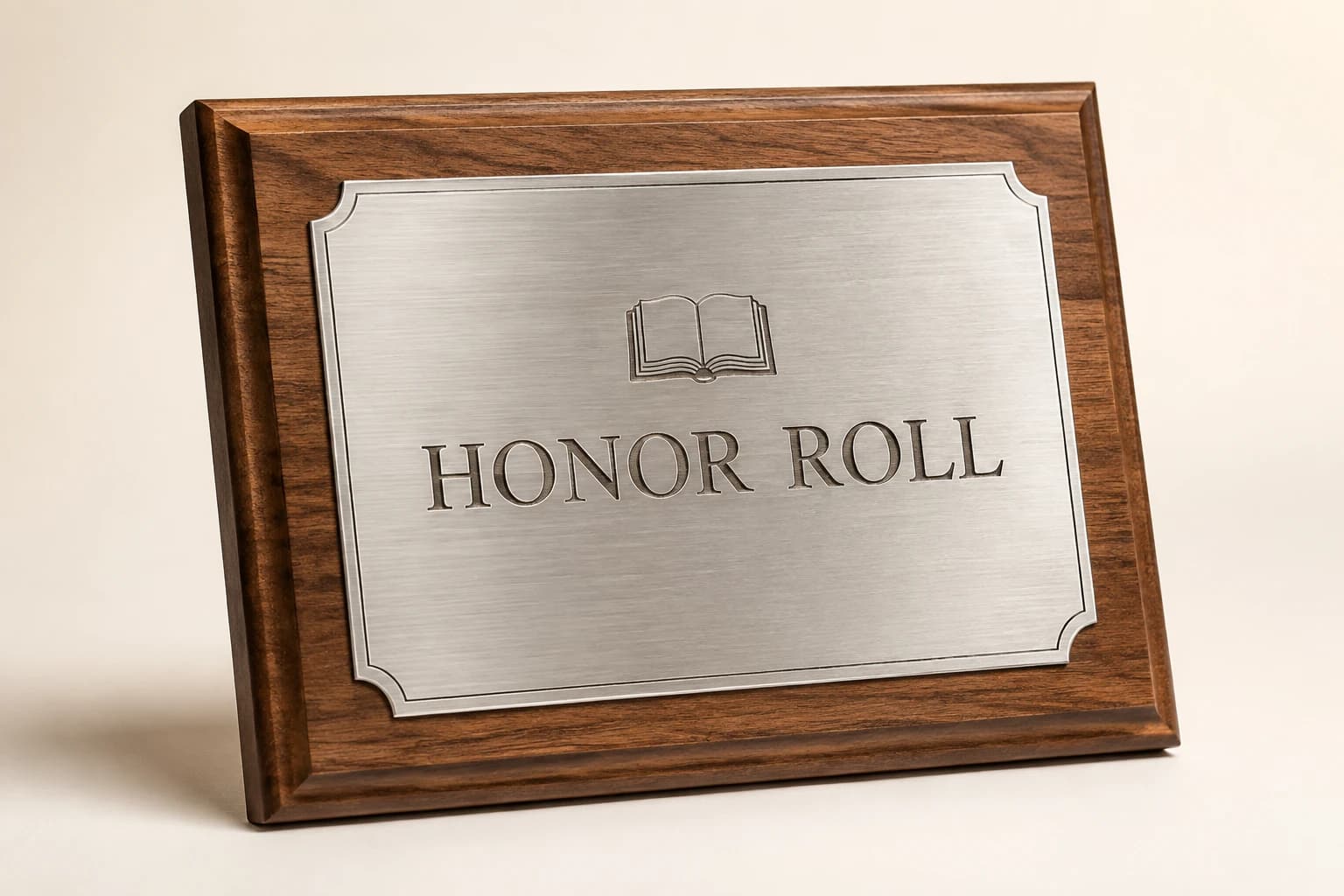
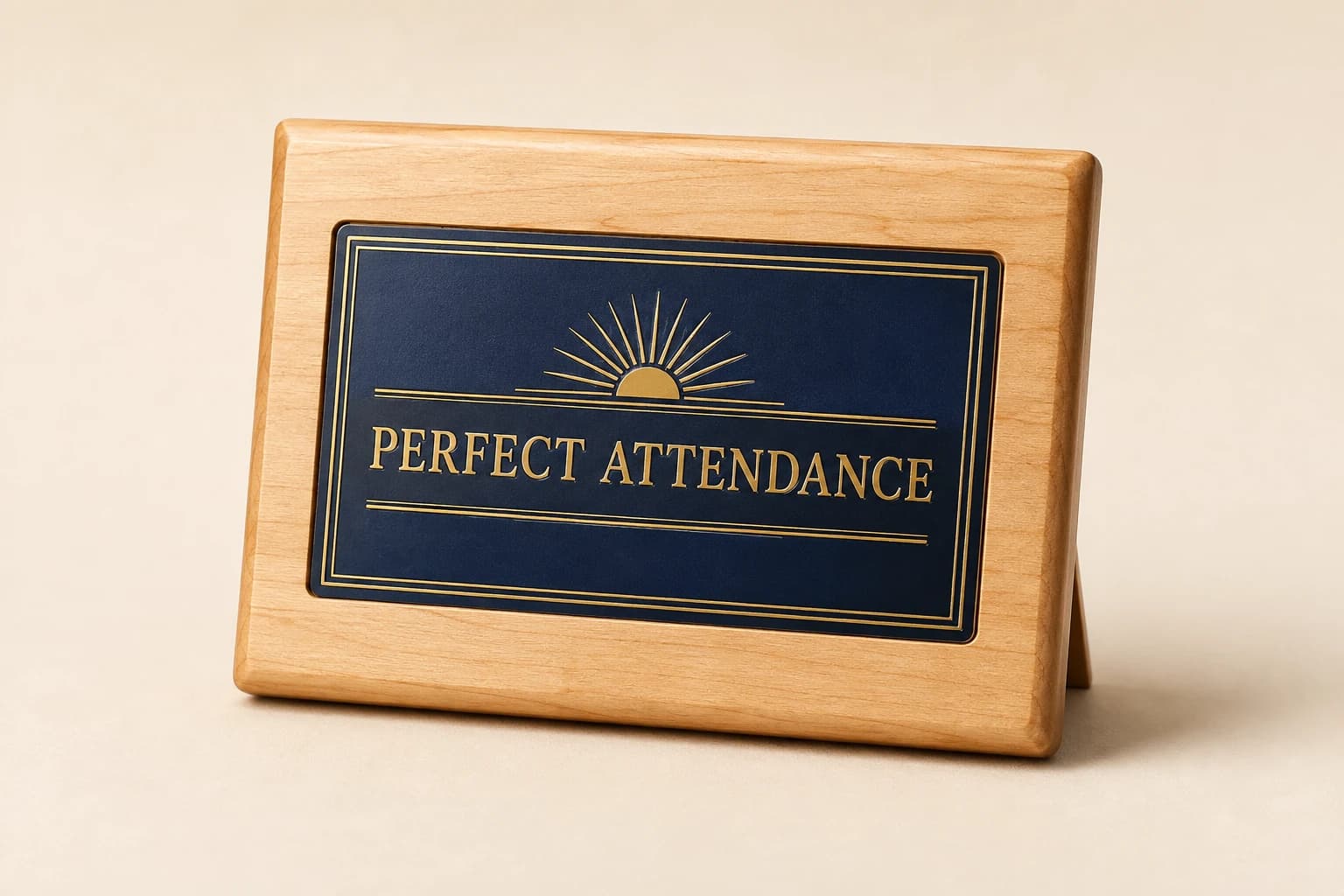
Can category rules differ within one program?
The school may approve a combined general-recognition piece while keeping a distinct major award as a separate object. State those exceptions explicitly. A rule such as one per student unless separately approved can work only when the exception categories and their recipients are clearly listed.
Do not invent exceptions while packing because a student appears to deserve another item. The program owner should authorize the scope before production. Keep the base-recipient subtotal and exception-piece subtotal separate so the quote and ceremony schedule can explain why the number of objects exceeds the number of unique students.
Count approved student pieces and shared displays
The fictional school approves forty unique student recipients for one combined personal piece each and three shared department displays. Enter forty main pieces and three extras to check forty-three objects. The worksheet also records fifty-two category entitlements, showing why the approved combined-recipient rule produces a different physical count.
Method: Multiply units by pieces per unit, then add separately entered categories and explicitly chosen spares. No eligibility or spare allowance is inferred.
Build your plan
Set spares yourself. This calculates the quantities you enter; it does not assume a recommended buffer.
Use the article’s example files
Sample rows are fictional planning examples. Replace them with authorized information and retain the approval references privately; this file is not a production release.
How should the combined inscription be organized?
For a combined piece, prioritize the student's approved name and the school occasion, then arrange the authorized categories in a readable order. The school can choose an order such as subject before service, but it should apply that convention deliberately rather than rely on whichever spreadsheet column appears first.
Ask for a proof using the longest actual category combination. A clean layout for one short category does not establish fit for four longer achievements. If the text becomes crowded, compare hierarchy or inscription area before shortening official category names. Any summary phrase should be approved as accurate recognition, not introduced merely to make the design easier.

Which school date belongs on the award?
Choose the academic year, term or event date that the program intends to record. A presentation date can differ from the achievement period, and a replacement order may be placed much later. The school should approve the meaning and exact display of the date before production.
Keep the period connected to the category record when awards are combined. If one object recognizes achievements from different terms, decide whether a broader approved year label explains them accurately. Do not silently use the order year for every item or merge historical recognition into the current year's category count without an explicit program decision.
How do absences affect the quantity?
Attendance should determine the handoff plan, not automatically change approved recognition. A student absent from the ceremony may still receive the same authorized piece later. Keep the named item assigned to that recipient and record who holds it until the school’s approved collection or delivery process is complete.
If the school changes eligibility for another reason, record that decision separately and identify the production status. A pre-production removal and a post-production unused piece have different physical consequences. Do not delete a row simply because a guest list says no, or treat a personalized unclaimed award as a generic spare for another student.
What should the quote show for both approaches?
Ask Honor Roll Awards to quote the actual physical quantities and personalization scope for each proposed rule. A category-based set and a combined-recipient set can differ in number of pieces, amount of text, layouts and presentation packing. Compare those complete scopes before choosing on unit price alone.
If the budget drives the decision, explain the recognition consequence to the program owner. Combining categories can preserve all approved achievements when the wording remains clear, but removing categories is a different choice. A less expensive physical total should not be achieved by quietly changing who is recognized or what their award says.
How do you verify the final order against the policy?
Trace one student with several categories through the approved rule, inscription proof and packing list. Then trace two different students with identical display names. These checks help reveal whether the order follows the program's decisions in the cases most likely to produce accidental merging or duplication.
At receiving, compare the actual personalized pieces with the approved item schedule rather than only counting cartons. Retain the rule and final mappings for historical replacements. Next year, reuse the process while obtaining fresh eligibility approvals; the prior year's recipients and category totals should remain historical references, not automatic entries in the new order.
How does the illustrative example work?
A fictional school approves fifty-two category entitlements across forty unique students. Its chosen program gives one combined personal award per student and three shared department displays. The physical purchase is 40 × 1 + 3 = 43 pieces, with no spares.
The worksheet preserves both the fifty-two achievements and forty recipients. The combined inscriptions must still record the school’s approved recognition accurately; the lower object count does not authorize deleting twelve achievements. The calculator verifies only the physical forty-three-piece scenario.
If the school instead chooses one object per category entitlement, the personal subtotal becomes fifty-two and the three displays bring the total to fifty-five. That is a different approved design with different personalization and packing work. Comparing forty-three and fifty-five is useful only when the school also reviews what each student actually receives under both approaches.
Which physical-recognition rule should the school choose?
Choose one piece per category when distinct achievements should remain separate objects, one combined piece per student when the full approved record can be presented clearly together, or a defined hybrid for specific exceptions. The school should compare recipient experience and inscription complexity alongside quantities, rather than treating deduplication as a policy decision.
| Option | Useful when | Decision to resolve |
|---|---|---|
| Per approved category | Each achievement has a separate physical record. | Preserve legitimate multiple awards for one student. |
| Per recipient with combined wording | Each student receives one object recording the approved scope. | Review the longest category combination. |
| Defined hybrid | The program keeps selected major awards separate. | List exception categories and quantities explicitly. |
What should you know before ordering?
Student award counts depend on the recognition policy the school approves. A repeated name can represent several valid achievements, and a combined plaque still needs accurate category wording. These questions explain quotation scope, identity checks, exceptions and absent recipients so the final physical order preserves the intended academic recognition.
What affects the cost of per-category versus combined student awards?
The physical quantity, amount of personalized text, selected format and packing scope can differ between the two approaches. Ask Honor Roll Awards for complete written options using the same approved achievements. A lower piece count may still need more complex individual layouts, so compare the full recipient experience and included work.
Can repeated student names be removed to reduce the order?
Only after the school approves a recipient-based rule and resolves identity. Repeated names may represent separate valid achievements, while identical display names may belong to different students. The coordinator should apply the approved policy, not create one by deleting rows that look repetitive in a spreadsheet.
Can one combined plaque list several subject awards?
Yes, when the school approves that presentation and the full wording is readable in the selected layout. Review the student with the longest actual combination before choosing the format. Combining objects should preserve the authorized achievements rather than silently replacing them with an unapproved generic summary.
Should an absent student’s award be cancelled?
Not simply because of absence. Use the approved recipient decision and arrange a later authorized handoff when the student remains entitled to the piece. Keep it assigned and identifiable, with a custodian and next action, instead of moving a personalized object into an unexplained spare inventory.
Can the school use a hybrid approach?
Yes, if the program clearly defines the base rule and the categories that receive separate pieces. Keep exception quantities outside the base-recipient count and approve their wording. A hybrid should be a deliberate recognition design, not a last-minute response to whichever extra trophies happen to be available.
Sources and scope
The sources below support the cited technical details. The ordering workflows are editorial recommendations. Your project specification, price and schedule are established in the written quote and approved proof.
- Gino's Awards: Custom Recognition Plaques for Schools · checked 2026-09-05
Which buying guide should you read next?
All buying guidesChoose an institutional record, a personal take-home award or both, then separate board entries, student pieces, future capacity and approval for public display.
Provide the approved inscription and a practical item reference, while keeping grades, birth dates, private contacts and eligibility evidence in the school’s authorized systems.